

Blog
How to Verify THCA Lab Results Before Buying (2026 Checklist)

Quick Answer
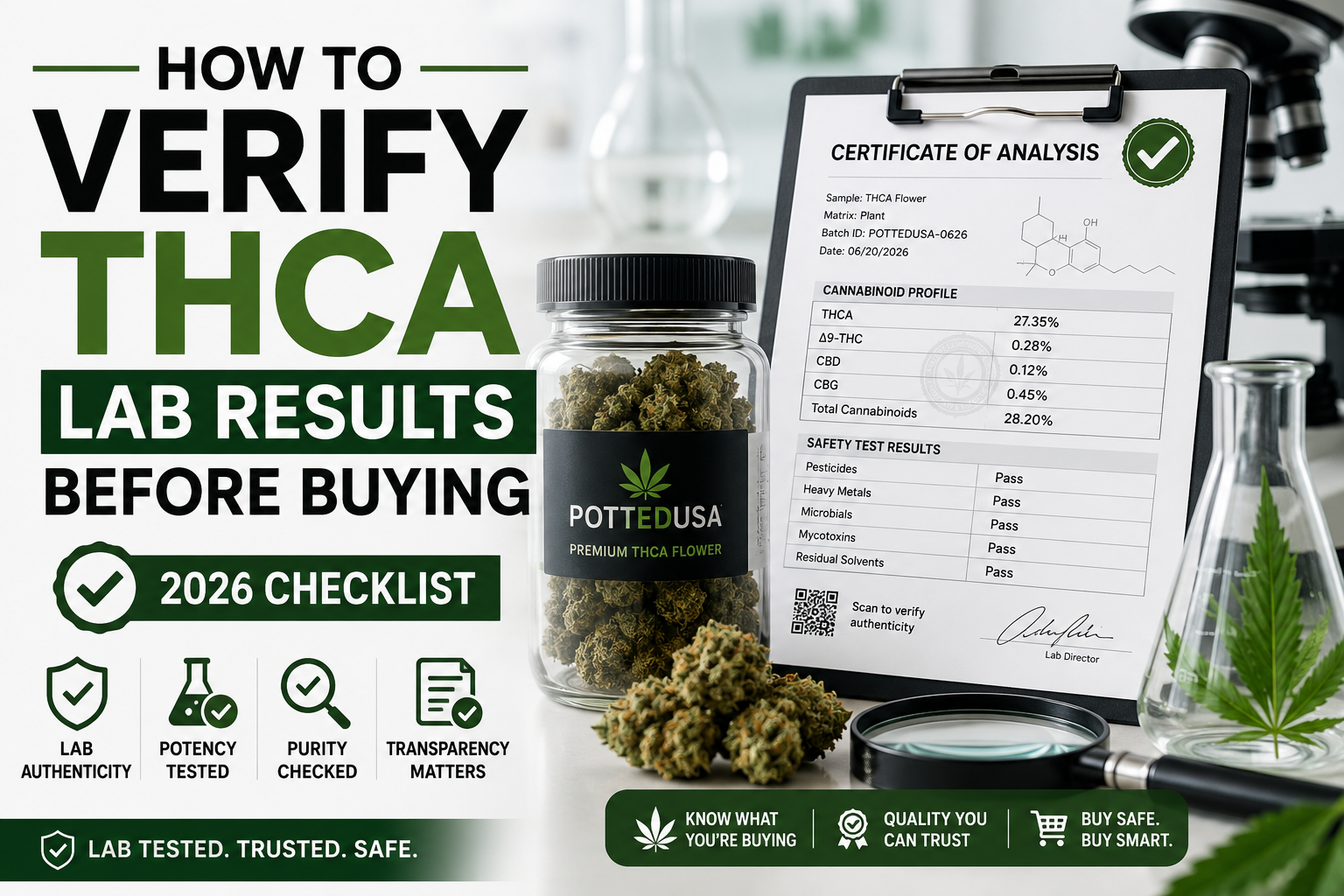
Buying THCA without checking its Certificate of Analysis (COA) is one of the biggest mistakes consumers make. A legitimate COA confirms cannabinoid potency, Delta-9 THC compliance, terpene profile, and contaminant testing. Before purchasing any THCA product in 2026, always verify that the report comes from an independent third-party laboratory and matches the exact batch you’re buying.
Key Takeaways
Every premium THCA product should include a recent Certificate of Analysis (COA).
Verify the batch number matches the product you’re purchasing.
Review THCA percentage, Delta-9 THC levels, and contaminant testing.
Avoid brands using outdated or incomplete lab reports.
Buy only from transparent companies that openly publish laboratory results.
Why THCA Lab Results Matter More Than Ever in 2026
The THCA market has grown rapidly across the United States. While this has created more choices for consumers, it has also made it easier for low-quality products to enter the market.
Many online stores advertise “premium THCA flower,” yet fail to provide reliable proof of what’s actually inside the package.
That’s where a Certificate of Analysis (COA) becomes essential.
A COA isn’t just another document it’s your best tool for verifying product quality before spending your money.
Whether you’re buying flower, concentrates, pre-rolls, or vapes, reviewing lab results should always be your first step.
What Is a THCA COA?
A Certificate of Analysis (COA) is an independent laboratory report that verifies the contents of a hemp product.
Instead of relying on marketing claims, a COA provides measurable laboratory data about the cannabinoids and overall product quality.
A genuine THCA COA commonly includes:
- THCA percentage
- Delta-9 THC percentage
- Total cannabinoids
- Batch number
- Testing laboratory information
- Date of analysis
- Heavy metal screening
- Pesticide testing
- Microbial analysis
- Residual solvent testing (where applicable)
These reports help buyers understand exactly what they’re purchasing.
Why Third-Party Testing Is So Important
Not all lab reports provide the same level of confidence.
The most trustworthy THCA brands send their products to independent third-party laboratories rather than testing products internally.
Independent testing reduces conflicts of interest and gives customers greater transparency.
When shopping online, always look for brands that openly publish recent laboratory reports instead of making unsupported potency claims.
2026 THCA COA Verification Checklist
Before adding any THCA product to your cart, go through this simple checklist.
1. Confirm the Laboratory Is Independent
The report should clearly identify the testing laboratory.
Avoid reports that don’t mention where testing was performed or provide incomplete laboratory information.
Reliable brands openly share this information because transparency builds trust.
2. Match the Batch Number
One of the easiest mistakes buyers make is ignoring the batch number.
Every COA should correspond to the exact batch of the product you’re purchasing.
If the batch numbers don’t match, the report may not represent that specific product.
3. Check the Test Date
Laboratory reports should be reasonably current.
An outdated COA doesn’t necessarily reflect the condition of today’s inventory.
Fresh testing demonstrates that the company actively monitors product quality.
4. Review the THCA Percentage
Many buyers immediately focus on potency.
While potency matters, it shouldn’t be the only factor influencing your purchase.
Instead of chasing the highest number, consider:
- Overall cannabinoid profile
- Product quality
- Terpene profile
- Cultivation methods
- Freshness
- Laboratory transparency
A balanced product backed by complete testing is often a better choice than one marketed solely on high percentages.
5. Verify Delta-9 THC Compliance
Under the 2018 Farm Bill, hemp products must meet federal Delta-9 THC limits.
A legitimate COA clearly displays these values, allowing buyers to confirm compliance before ordering.
Understanding these numbers is especially important for customers purchasing THCA online across different U.S. states.
Why Contaminant Testing Is Just as Important as Potency
Many buyers pay attention only to cannabinoid percentages.
However, a quality laboratory report should also include contaminant testing.
Look for reports covering:
- Heavy metals
- Pesticides
- Mold and yeast
- Harmful bacteria
- Residual solvents (for extracts)
Clean products are just as important as potent products.
Shop Smarter with Verified THCA Products
Buying from transparent companies makes the entire process easier.
Choose brands that provide:
- Easy access to laboratory reports
- Recent COAs
- Verified batch numbers
- Clear cannabinoid information
- Responsive customer support
When a company openly shares this information, it demonstrates confidence in its products and helps customers make informed purchasing decisions.
CTA
Looking for premium THCA products backed by transparent laboratory testing?
Explore our Lab-Tested THCA Collection and review every Certificate of Analysis before you buy
Common Red Flags That May Indicate a Fake THCA COA
Unfortunately, not every lab report you find online is trustworthy. As the THCA market grows, some sellers use outdated, incomplete, or misleading Certificates of Analysis to make their products appear more attractive.
Before placing an order, watch for these warning signs:
Missing Laboratory Information
A genuine COA should clearly identify the testing laboratory, including its name and contact information. If you can’t verify where the testing was performed, that’s a major red flag.
Missing Batch Numbers
Every laboratory report should correspond to the exact product batch you’re purchasing.
If there’s no batch number or it doesn’t match the product label you can’t be sure the report belongs to that product.
Incomplete Cannabinoid Profile
A professional COA should list more than just THCA.
It should also include cannabinoids such as:
- Delta-9 THC
- CBGA
- CBDA
- CBD
- CBG
- Total cannabinoids
A complete cannabinoid profile provides a clearer picture of the product’s composition.
No Contaminant Testing
Potency alone doesn’t guarantee quality.
A trustworthy COA should also include testing for:
- Heavy metals
- Pesticides
- Mold and yeast
- Harmful bacteria
- Residual solvents (when applicable)
If this information is missing, consider choosing another brand.
How to Read a THCA COA Like a Buyer, Not Just a Shopper
Many people only look at the THCA percentage.
Experienced buyers go much further.
Here’s a simple approach:
Step 1 – Verify Product Details
Confirm the product name, batch number, and testing date all match what you’re purchasing.
Step 2 – Review Cannabinoid Potency
Check:
- THCA %
- Delta-9 THC %
- Total Cannabinoids
Avoid assuming that the highest percentage automatically means the best product.
Step 3 – Review Safety Testing
Quality products should pass screening for:
- Heavy metals
- Pesticides
- Microbial contamination
- Residual solvents
Clean products are just as important as potent ones.
Step 4 – Check the QR Code
Many reputable THCA brands include a QR code on the product packaging.
Scanning the QR code should take you directly to the corresponding Certificate of Analysis.
If the QR code doesn’t work or leads to unrelated information, proceed with caution.
Why Transparency Builds Trust
The most respected THCA companies don’t hide their lab reports.
Instead, they make Certificates of Analysis easy to access before customers make a purchase.
Transparent brands typically provide:
- Updated COAs
- Verified batch numbers
- Clear product descriptions
- Honest cannabinoid information
- Responsive customer support
This level of transparency helps customers buy with confidence.
Buying THCA Online? Follow This Simple Checklist
Before completing your order, ask yourself:
Does the product include a recent COA?
Is the laboratory independent?
Does the batch number match?
Has the product passed contaminant testing?
Are cannabinoid percentages clearly listed?
Is the company transparent about sourcing and testing?
If the answer is “yes” to each question, you’re in a much better position to make an informed purchase.
Frequently Asked Questions
What does THCA COA mean?
A THCA COA (Certificate of Analysis) is an independent laboratory report that verifies cannabinoid content, potency, and product safety.
Why is a COA important?
A COA helps buyers confirm that a product has been tested for potency and contaminants rather than relying solely on marketing claims.
Can I trust every THCA lab report?
No. Always verify that the report comes from an independent laboratory, matches the product batch, and includes comprehensive testing information.
What should a THCA COA include?
A complete COA generally includes cannabinoid potency, Delta-9 THC levels, batch information, testing date, laboratory details, and contaminant screening.
Should I avoid products without lab reports?
If a company doesn’t provide accessible laboratory results, it’s difficult to verify product quality. Choosing brands that openly share third-party testing information is generally the more informed approach.
Final Thoughts
Buying THCA products shouldn’t be based on marketing claims alone.
A legitimate Certificate of Analysis (COA) gives buyers valuable information about cannabinoid content, product quality, and safety testing. Spending a few minutes reviewing a COA before ordering can help you make more informed decisions and avoid unnecessary risks.
Whether you’re purchasing THCA flower, concentrates, pre-rolls, or other hemp products, transparency should always be one of the most important factors in your buying decision.
Ready to Shop with Confidence?
Looking for premium THCA products backed by transparent third-party testing?
Browse PottedUSA’s Lab-Tested Collection, review the latest Certificates of Analysis, and choose products with confidence before placing your order.