

Blog
How THCA Converts to THC: The Science Behind the High

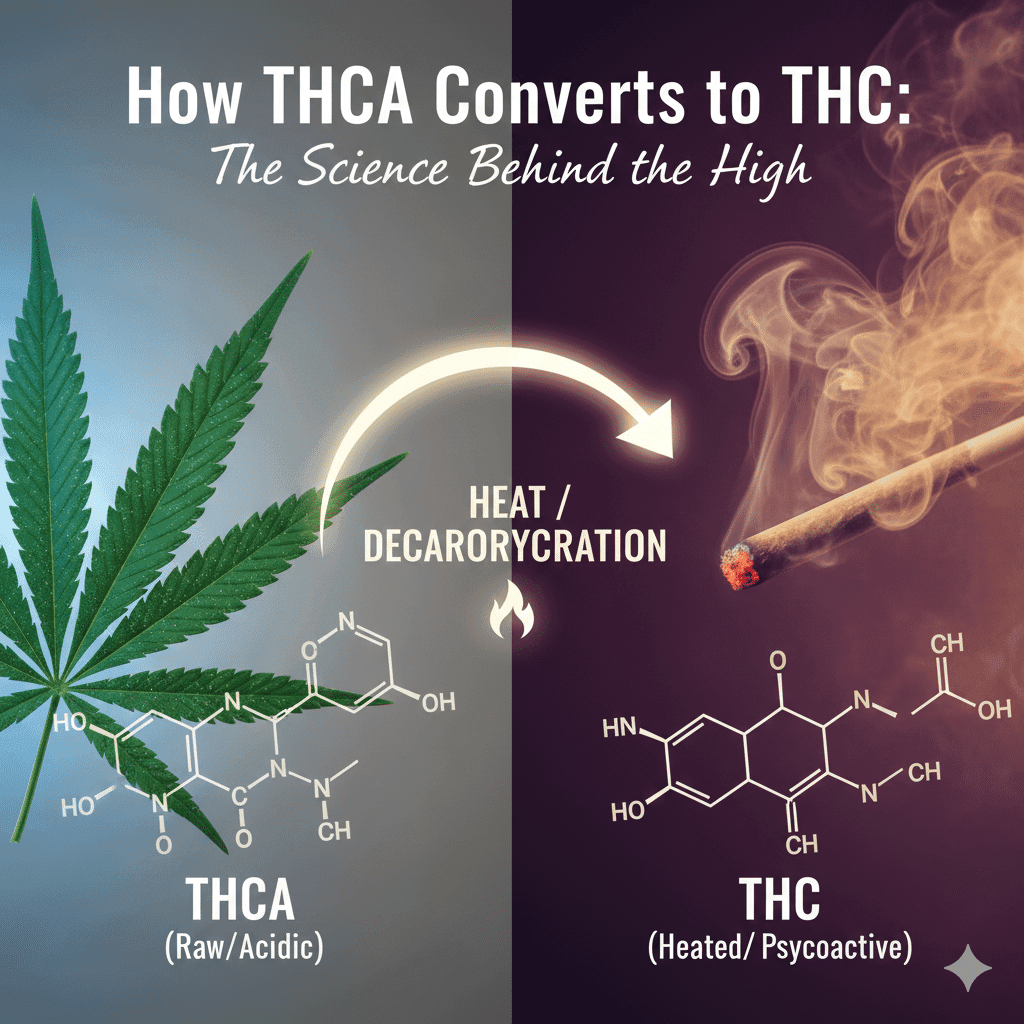
If you’ve ever wondered why raw cannabis doesn’t cause a high but smoking it does, the answer lies in a fascinating chemical process called THCA decarboxylation. This transformation is the foundation of how cannabis works, and understanding it gives you deeper control over potency, effects, and consumption methods.
In this guide, we’ll break down the science behind how THCA converts into THC, what triggers the change, and why it matters for anyone buying THCA flower in 2025. Whether you’re a beginner or a curious enthusiast, this article will help you understand cannabis on a molecular level without confusion or technical overload.
What Is THCA? Understanding the Raw Form of Cannabis
Before cannabis produces psychoactive effects, it exists in a non-intoxicating state known as THCA (tetrahydrocannabinolic acid). THCA is the naturally occurring cannabinoid found in freshly harvested cannabis and hemp plants.
Unlike THC, THCA:
- Does not produce a high
- It is stable in raw flower
- Exists before any heat is applied
- Plays a crucial role in cannabis chemistry
This means when you look at a lab report showing high THCA percentages, you’re seeing potential THC, not active THC.
What Is Decarboxylation? (Simple Explanation)
Decarboxylation is the process that removes a carboxyl group from THCA, converting it into Delta-9 THC.
In simpler terms:
Heat transforms THCA into THC
This reaction happens when cannabis is:
- Smoked
- Vaped
- Dabbed
- Heated during cooking
Without decarboxylation, cannabis remains non-psychoactive, no matter how strong the flower looks.
How THCA Converts to THC (Step-by-Step Science)
Let’s break it down clearly:
Step 1: Raw Cannabis Contains THCA
Fresh cannabis plants produce cannabinoids in acid form. THCA is stable and inactive while the plant remains unheated.
Step 2: Heat Is Applied
When heat reaches cannabis (typically 220–250°F), it triggers molecular movement.
Step 3: Carboxyl Group Is Released
The heat removes a carbon dioxide molecule (CO₂) from THCA.
Step 4: THC Becomes Active
Once the carboxyl group is gone, THCA becomes THC, capable of binding to cannabinoid receptors in the brain.
This transformation happens almost instantly when smoking or vaping.
Why THCA Doesn’t Get You High (Until Heated)
THCA cannot effectively bind to CB1 receptors in the brain, the receptors responsible for psychoactive effects. THC, however, binds easily.
That’s why:
- Eating raw cannabis won’t cause intoxication
- Smoking or vaping does
- Heat is the key difference
This distinction is also why THCA products remain federally compliant when sold under hemp laws.
THCA vs THC: Key Scientific Differences
| Feature | THCA | THC |
| Psychoactive | ❌ No | ✅ Yes |
| Found in raw flower | ✅ Yes | ❌ No |
| Requires heat | ❌ No | ❌ Already active |
| Legal status (hemp) | ✅ Allowed | ❌ Restricted |
| Molecular structure | Acidic | Neutral |
Understanding this table alone clears up 90% of consumer confusion.
What Affects THCA Decarboxylation Efficiency?
Not all heat exposure converts THCA equally. Several factors influence how much THC you actually get:
1. Temperature
- Too low → incomplete conversion
- Too high → THC degradation
Optimal range: 230–245°F
2. Time
- Short exposure → partial activation
- Long exposure → full conversion
Smoking activates THCA instantly, while cooking requires precise timing.
3. Moisture Content
Well-cured flower decarboxylates more efficiently than damp buds.
Why THCA Science Matters When Buying Cannabis
Knowing how THCA converts to THC helps you:
- Choose a better flower
- Understand lab results
- Avoid misleading potency claims
- Predict effects accurately
High THCA doesn’t mean instant intensity; it means potential.
That’s why reputable brands focus on:
- Proper curing
- Fresh packaging
- Accurate lab testing
Trusted retailers like PottedUSA clearly label THCA content and provide verified lab reports so customers understand exactly what they’re buying.
Different Ways THCA Becomes THC
Each consumption method affects decarboxylation differently:
Smoking
- Fastest activation
- Near-instant THC conversion
- High bioavailability
Vaping
- Controlled temperature
- Cleaner conversion
- Preserves terpenes
Dabbing
- Extremely rapid conversion
- High potency
- Requires experience
Edibles
- Requires pre-decarboxylation
- Slower onset
- Longer-lasting effects
Understanding these differences gives users control over intensity and duration.
Can THCA Convert to THC Naturally Over Time?
Yes, but very slowly.
Factors like:
- Heat exposure
- UV light
- Oxygen
- Poor storage
can cause gradual decarboxylation, which is why proper storage is essential for THCA flower.
Quality brands package products to prevent accidental activation, preserving freshness and compliance.
Is Decarboxylation Always Desired?
Not necessarily.
Some users prefer:
- Raw THCA for non-intoxicating use
- Juicing raw flower
- Cold extractions
Others want:
- Full psychoactive effects
- Maximum THC conversion
Understanding the science lets consumers choose intentionally, not accidentally.
Why THCA Education Is Important in 2025
With growing interest in hemp-derived cannabinoids, misinformation is everywhere. Many consumers misunderstand the legality, potency, and effects of THCA.
Science-based education:
- Builds trust
- Prevents bad purchases
- Encourages safe consumption
Brands that educate, not exaggerate, are the ones gaining long-term authority.
Frequently Asked Questions (FAQs)
Does THCA automatically turn into THC?
No. THCA only converts to THC when exposed to heat or prolonged environmental stress.
Can THCA flower cause a high without smoking?
Not in its raw form. Heat is required for psychoactive effects.
Is THCA stronger than THC?
THCA itself is not psychoactive. Its strength depends on how efficiently it converts to THC.
Why do lab reports show high THCA percentages?
Because labs test raw flower before decarboxylation. THCA reflects potential THC, not active THC.
Is THCA legal to buy online?
When derived from compliant hemp and tested properly, THCA products can be legally sold in many states.
Final Thoughts: Science Makes You a Smarter Consumer
Understanding THCA decarboxylation removes confusion and puts control back in your hands. Instead of relying on marketing claims, you now know how cannabis actually works at the molecular level.
Whether you’re buying THCA flower, pre-rolls, or concentrates, knowledge helps you choose better products, avoid disappointment, and enjoy cannabis more intentionally.
Educational platforms and trusted retailers like PottedUSA continue to lead the industry by offering transparency, lab-tested products, and consumer-focused education, exactly what modern cannabis shoppers expect