

Blog
Lab-Tested THCA: Why Certificates of Analysis Matter Before You Buy

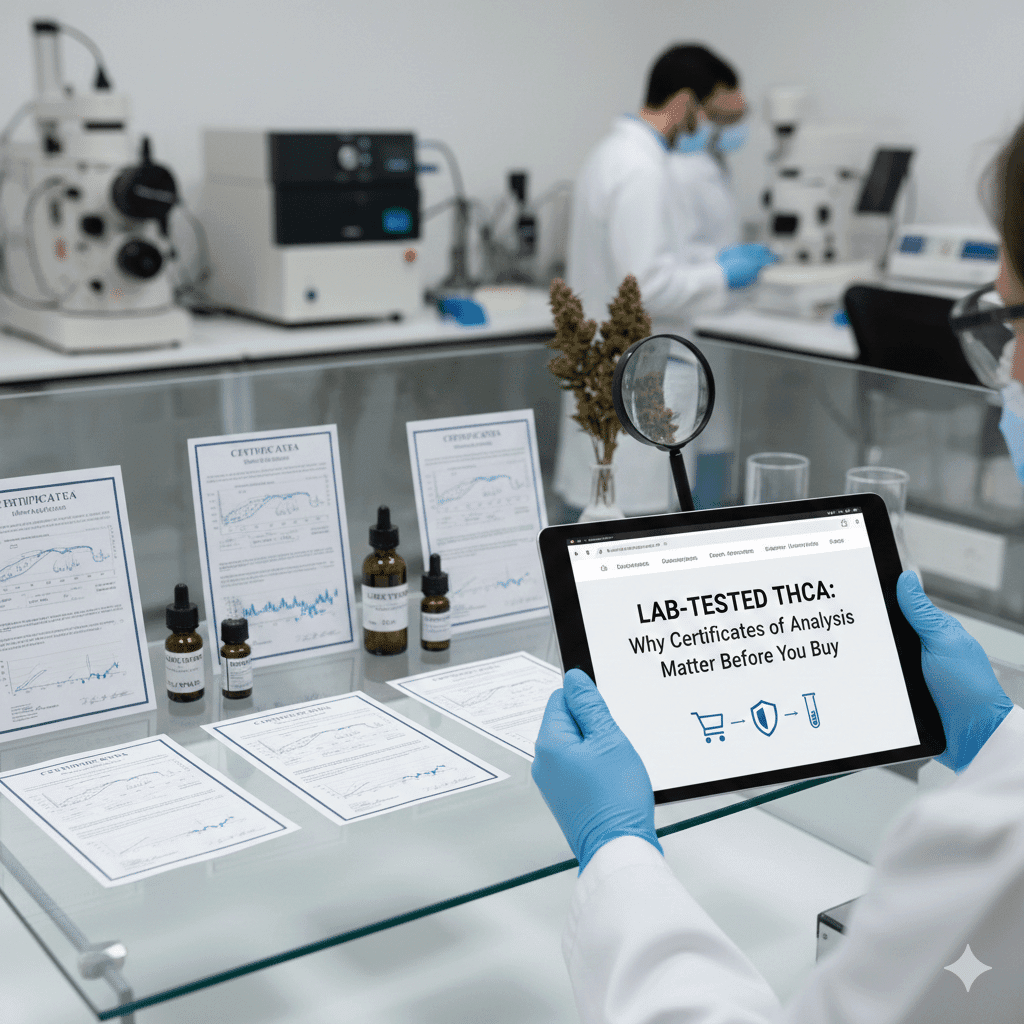
As the THCA market continues to expand in 2025, consumers are becoming more informed and more cautious. One term you’ll see repeatedly on trusted product pages is lab-tested THCA, but what does that really mean?
This article explains why Certificates of Analysis (COAs) are essential, how they protect buyers from fake or unsafe products, and why lab transparency is now a non-negotiable standard in the hemp industry.
If you’re serious about quality, safety, and compliance, understanding lab testing isn’t optional; it’s critical.
What Does “Lab-Tested THCA” Actually Mean?
Lab-tested THCA refers to products that have been analyzed by an independent, third-party laboratory to verify:
- Cannabinoid potency
- Delta-9 THC compliance
- Purity and safety
- Absence of harmful contaminants
Unlike marketing claims, lab testing provides objective proof of what’s inside the product not just what’s written on the label.
This transparency separates legitimate THCA brands from unverified sellers flooding the market.
What Is a Certificate of Analysis (COA)?
A Certificate of Analysis is a detailed laboratory report that confirms the composition and safety of a cannabis or hemp product.
A proper COA includes:
- THCA percentage
- Delta-9 THC level (must be under 0.3%)
- Terpene profile
- Heavy metals screening
- Pesticide analysis
- Microbial safety results
If a seller cannot provide a COA, that’s a major red flag.
Why COAs Matter More Than Ever in 2025
As demand grows, so does misinformation. Many products advertised as THCA are:
- Improperly tested
- Mislabelled
- Non-compliant
- Potentially unsafe
Lab testing ensures:
- Federal hemp law compliance
- Accurate potency expectations
- Consumer trust
- Long-term brand credibility
This is especially important as consumers increasingly search for lab-tested THCA before purchasing.
How COAs Protect You as a Buyer
Certificates of Analysis are not just paperwork; they are consumer protection tools.
1. Confirms Legal Compliance
COAs verify that Delta-9 THC remains below the legal limit, keeping the product federally compliant.
2. Prevents Fake THCA Products
Without lab results, there’s no way to confirm whether a product actually contains THCA or something else entirely.
3. Ensures Product Safety
COAs screen for mold, bacteria, pesticides, and heavy metals that can harm users.
4. Verifies Potency
You know exactly what you’re consuming, avoiding under- or overdosing.
How to Read a THCA Lab Report (COA)
Many consumers see lab reports but don’t know how to interpret them. Here’s what to focus on:
Cannabinoid Panel
Look for:
- High THCA percentage
- Delta-9 THC below 0.3%
This confirms legality and potency.
Pass/Fail Sections
Ensure all contaminants show a PASS status.
Lab Credentials
The lab should be:
- Independent
- ISO-certified
- Clearly named
Lab Testing vs Marketing Claims
A product can say anything, but lab reports prove everything.
That’s why educational content like THCA Flower Buying Guide – How to Choose Quality & Avoid Fakes is essential reading for consumers who want to avoid misleading claims and low-quality products.
Transparent brands encourage buyers to check the COA before checkout, not hide it behind vague descriptions.
Why Trusted Brands Emphasize Lab-Tested THCA
Reputable retailers understand that long-term success depends on trust.
Platforms like PottedUSA prioritize:
- Third-party lab verification
- Clear COA access via QR codes
- Batch-specific testing
- Transparent sourcing
This approach reassures customers and reduces confusion, especially for first-time THCA buyers.
Lab Testing and Product Consistency
Lab testing also ensures batch consistency, meaning:
- Effects remain predictable
- Potency doesn’t fluctuate
- Quality standards stay intact
This is particularly important for repeat buyers who expect the same experience every time.
If you want to understand how cannabinoid conversion works behind the scenes, How THCA Converts to THC: Science Behind the High explains why testing accuracy truly matters.
What Happens When THCA Isn’t Lab Tested?
Products without lab testing often result in:
- Unexpected psychoactive effects
- Legal risks
- Poor user experience
- Loss of consumer trust
In 2025, a lack of lab testing signals outdated or irresponsible business practices.
Commercial Importance of Lab-Tested THCA
From a business perspective, lab testing:
- Improves brand authority
- Increases customer retention
- Supports SEO trust signals
- Reduces chargebacks and complaints
Google also favors transparent, trustworthy content, which means educational articles like this indirectly support ranking growth.
How to Verify Lab Results Before Buying
Before purchasing, always:
- Check for a visible COA
- Match batch numbers
- Confirm the test date is recent
- Avoid sellers who refuse transparency
This simple habit protects both your health and your wallet.
Frequently Asked Questions (FAQs)
What does lab-tested THCA mean?
It means the product has been independently tested to confirm potency, safety, and legal compliance.
Are COAs required by law?
While enforcement varies, reputable hemp brands treat COAs as mandatory.
Can I trust a THCA product without lab results?
No. Without lab testing, there’s no proof of quality or legality.
Do all labs test the same way?
No. Always look for ISO-certified, third-party labs.
Why do some THCA products feel inconsistent?
Lack of proper testing and batch control is usually the cause.
Final Thoughts: Lab Testing Is Non-Negotiable
In today’s THCA market, lab-tested THCA is not a luxury — it’s a requirement. Certificates of Analysis provide clarity, confidence, and credibility in an industry that’s rapidly evolving.
As consumers become smarter, brands that prioritize transparency will continue to rise while those that hide lab results will fade.
Educational, science-backed content and verified lab testing are what separate trusted platforms like PottedUSA from the rest.