

Blog
THCA vs CBD Effects, Benefits & How to Choose (2026 Guide)

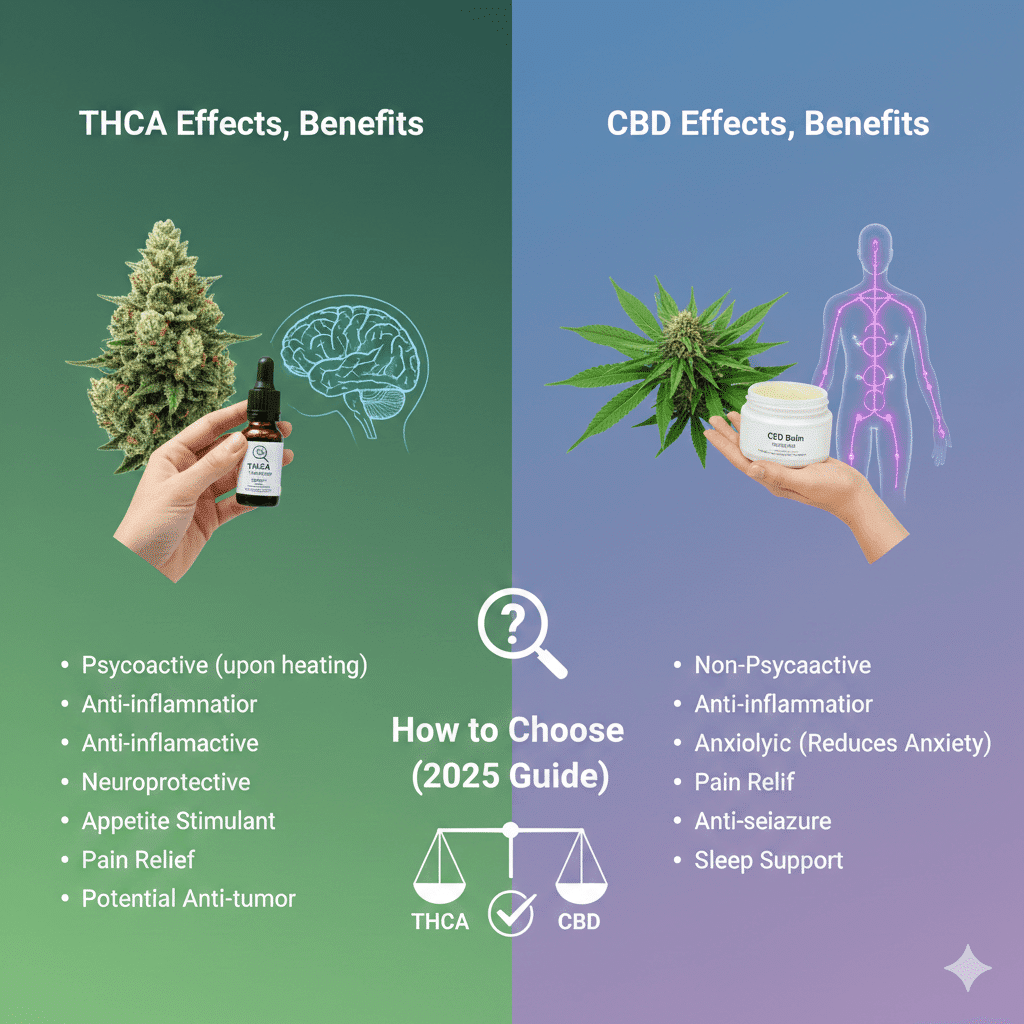
Today’s cannabis and hemp market offers more choices than ever, and two cannabinoids dominate most conversations: THCA and CBD. Both come from the same plant family, yet they behave very differently in the body and deliver very different experiences.
So the question most buyers ask is simple:
THCA vs CBD — which one is right for me?
Which works better for stress, pain, or relaxation?
Which is legal, and which gets you high?
In this detailed 2026 guide, we break down the science, benefits, effects, uses, legality, and product types so you can confidently choose the cannabinoid that matches your goals.
What Is THCA?
THCA stands for Tetrahydrocannabinolic Acid. It is the raw, unheated form of THC naturally found in hemp and cannabis flower.
Important point:
THCA itself is non-psychoactive
But when heated through:
- smoking
- vaping
- cooking
- decarboxylation
THCA converts into THC, which produces the well-known euphoric cannabis high.
Key Characteristics of THCA
- Non-psychoactive in raw form
- converts to THC when heated
- strong potential effects when activated
- commonly found in THCA flower, pre-rolls, and concentrates
People choose THCA when they want potent THC-like performance while still complying with federal hemp laws at purchase.
What Is CBD?
CBD — Cannabidiol — is one of the most widely used cannabinoids in the world. Unlike THC, CBD does not convert into anything psychoactive and does not make you feel “high.”
Key Characteristics of CBD
- fully non-intoxicating
- supports wellness without euphoria
- available in oils, vapes, gummies, flower, capsules
- commonly used for calm, balance, and daily wellness
CBD works gently with the body’s endocannabinoid system, often chosen by people who don’t want altered perception or strong intensity.
THCA and CBD interact differently with the brain and body
THCA
- converts to THC after heating
- activates CB1 receptors (after conversion)
- produces euphoric and psychoactive effects when decarboxylated
CBD
- does not convert to THC
- does not strongly bind to CB1 receptors
- has no intoxicating effects
This is why:
THCA (after heating) feels stronger
CBD feels calmer and clearer
Legality: THCA vs CBD in the USA
Under the 2018 Farm Bill:
- hemp-derived CBD <0.3% Delta-9 is federally legal
- Hemp-derived THCA is legal in raw form if Delta-9 is below 0.3%
However:
When THCA converts to THC through heat, psychoactive laws may apply
Some states restrict high-THC flower
Always check local regulations.
For deeper legal guidance, see THCA Shipping Guide: Which States Allow Delivery — this explains compliant states and shipping rules.
Effects Comparison: Which Feels Stronger?
Here is the simple answer:
THCA feels stronger after heating
CBD feels milder and non-intoxicating
THCA (after conversion to THC)
People report:
- euphoria
- enhanced mood
- deep relaxation
- body and mind “high.”
- increased sensory perception
CBD
People report:
- calmness
- reduced stress
- clearer head
- emotional balance
- physical comfort
CBD is ideal for those who want relief without altered perception.
Which Is Better for Stress and Relaxation?
For intense relaxation and mood lift:
THCA (activated THC)
For gentle stress relief with mental clarity:
CBD
If stress relief is your main goal, you may also like the guide Best THCA Flower for Relaxation and Stress Relief, which compares strains suited for unwinding.
Which Is Better for Pain Relief?
User experiences suggest:
- THCA/THC may help with stronger, more noticeable relief
- CBD may help with daily discomfort and inflammation
CBD is often preferred for daytime use because it does not impair function.
Which Works Better for Sleep?
For deep sedation:
THCA after decarboxylation
For calming pre-sleep relaxation:
CBD
Many users combine both, using CBD earlier in the evening and THCA closer to bedtime.
Product Types: THCA vs CBD
THCA Products
- THCA flower
- THCA pre-rolls
- THCA concentrates
- THCA diamonds
- THCA edibles
- THCA vapes
If you want a strong experience, read THCA Pre-Rolls vs Delta-9: Which Hits Better? for inhalation comparison.
CBD Products
- CBD oils/tinctures
- CBD gummies
- CBD capsules
- CBD topicals
- CBD vape pens
- CBD flower
CBD suits long-term daily wellness routines.
Which One Should You Choose?
Choose THCA if you want:
- strong effects after heating
- recreational or intense relaxation
- THC-like experience
- heavier mood elevation
Choose CBD if you want:
- zero intoxication
- daily wellness
- anxiety relief without “high”.
- gentle body comfort
Many users benefit most by using both together, leveraging the entourage effect.
Where to Buy Quality THCA and CBD
Always look for:
- third-party lab testing
- COAs available online
- transparent sourcing
- natural terpene preservation
Trusted brands like PottedUSA provide detailed lab reports and product variety across both categories.
FAQs — THCA vs CBD
Does THCA get you high?
Raw THCA does not, but when heated, it converts to THC and becomes psychoactive.
Is CBD legal everywhere in the USA?
Hemp-derived CBD <0.3% Delta-9 THC is federally legal, but state rules vary.
Which is better for beginners?
CBD is usually easier for beginners since it has no intoxicating effects.
Can I take THCA and CBD together?
Yes, many users combine them to experience the entourage effect.
Which has stronger effectsstronger ?
THCA (after activation into THC) has noticeable effects than CBD.
Final Thoughts
THCA and CBD are not competitors they’re different tools for different needs.
- THCA delivers powerful results after heating
- CBD delivers clear-headed wellness without intoxication
Your ideal choice depends on:
- whether you want a “high.”
- your wellness goals
- tolerance level
- state legality
If you want to compare both side by side, explore our Comparison Page to review effects, product options, and lab reports