

Blog
THCA Potency Explained: Does Stronger Mean Better?

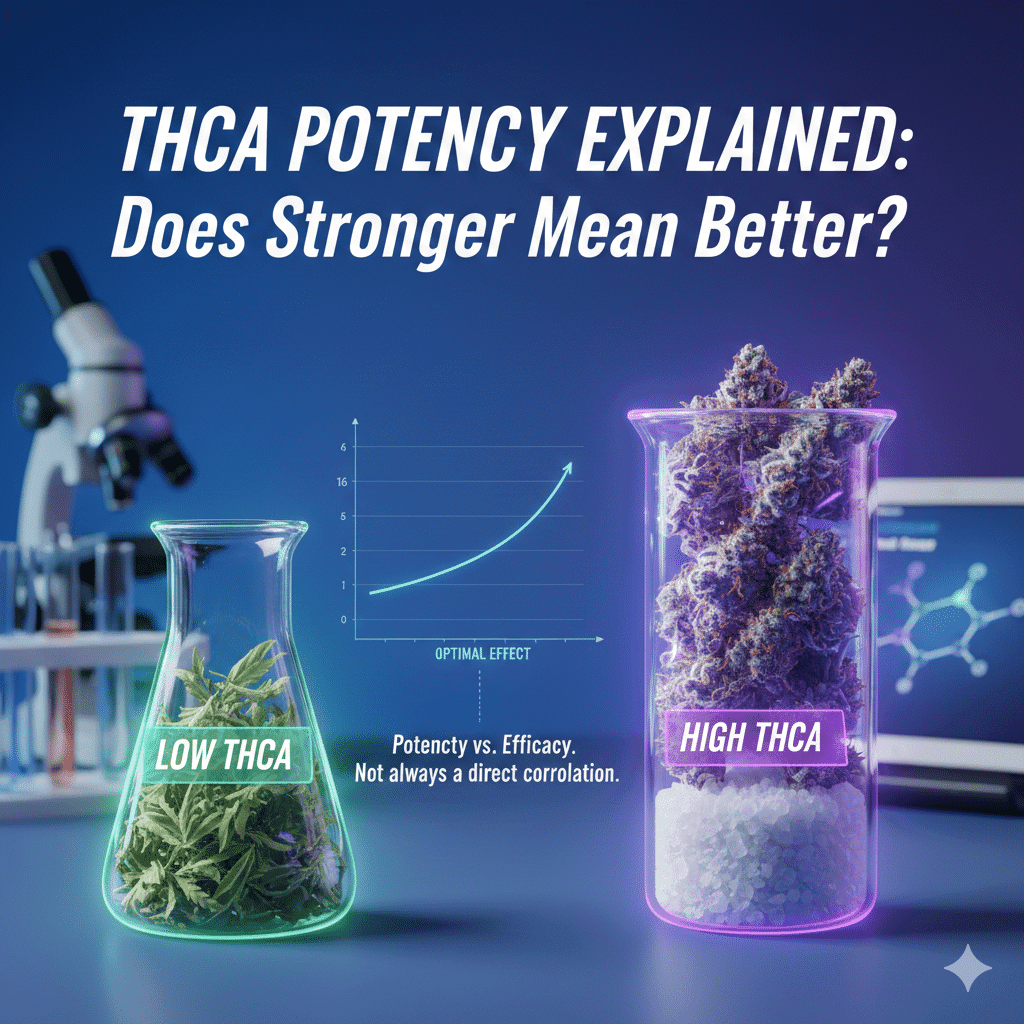
When shopping for THCA flower, concentrates, or edibles, one of the first things people look at is potency percentage. A higher number often looks more appealing 28%, 30%, even 35% THCA. But an important question remains:
Does stronger always mean better?
The truth is more nuanced. Potency does matter, but it is not the only factor that determines quality, effects, or overall experience. In this guide, we’ll break down what THCA potency really means, how it affects you, and how to choose the right strength for your needs.
What Is THCA Potency?
THCA potency refers to how much tetrahydrocannabinolic acid is present in a cannabis product before heating. THCA itself is non-psychoactive until it is converted into THC through heat. This process is called decarboxylation.
Products display potency as a percentage on labels, such as:
- 15% THCA
- 22% THCA
- 30%+ THCA
Higher percentages mean more THCA per gram of product, which can potentially lead to stronger THC effects once heated or vaporized.
How THCA Converts Into THC
When THCA is exposed to heat (smoking, vaping, baking), it loses a carboxyl group and turns into THC. That is why potency numbers often translate into how “strong” a product will feel after consumption.
This conversion process has been scientifically explained in detail in How THCA Converts to THC: Science Behind the High, a helpful read if you want to understand the chemistry side.
Does Higher THCA Always Mean Stronger Effects?
Short answer: Often yes, but not always.
Long answer: Potency is just one factor. Two strains with equal THCA levels can feel completely different due to:
- terpene profile
- product type (flower vs. concentrate)
- freshness and storage
- user tolerance
- method of consumption
A 30% THCA strain with poor terpene content may feel weaker than a 22% strain with rich terpenes like myrcene, limonene, and linalool.
Potency vs. Quality: Why They Aren’t the Same
Many beginners assume that higher potency automatically means premium quality. However, real quality includes:
- aroma and flavor
- smoothness
- proper curing
- absence of contaminants
- verified lab testing
Lab testing is especially important because it verifies authenticity, safety, and the actual cannabinoid percentages. If potency matters to you, you should always look for COAs from reputable labs. To learn why this is crucial, see Lab-Tested THCA: Why Certificates of Analysis Matter.
Ideal Potency Ranges for Different Users
Choosing the right potency depends on experience level and goals.
Beginners
- 10%–18% THCA
- smoother experience
- less overwhelming
- easier dosing
Best for relaxation, light mood lift, and gentle stress relief.
Intermediate Users
- 18%–25% THCA
- stronger euphoria
- noticeable body effects
- ideal for evenings or weekends
Experienced Users
- 25%–35%+ THCA
- intense potency
- best suited for tolerance-built consumers
- preferred for dabs and concentrates
If you are exploring concentrates or dabs, check Best THCA Concentrates & Dabs in 2026 for high-potency product options.
How Potency Is Measured in Labs
Certified labs test cannabis using machines like HPLC to determine:
- THCA percentage
- THC percentage
- total cannabinoids
- terpenes
- residual solvents
- heavy metals
Product labels often show:
- THCA %
- Total THC after conversion
- Total cannabinoids
Understanding the label helps you choose smarter rather than chasing numbers blindly.
Does Stronger Mean Better for Health?
Not necessarily.
High-potency products may:
- increase tolerance faster
- lead to stronger psychoactive effects
- feel overwhelming for new users
Lower to medium potency may be better for:
- daytime activity
- social comfort
- clear-headed effects
- micro-dosing
The “best” potency is the one that fits your personal goals.
How Consumption Method Changes Potency Perception
The same THCA percentage can feel different depending on how you consume it:
- smoking = fast effects, strong peak, shorter duration
- vaping = cleaner taste, efficient conversion
- edibles = slower onset, longer-lasting body effects
Consumers looking for edible options often search THCA Edibles: What They Are and Where to Buy Them Online, which explains how potency works differently when eaten.
Tips for Choosing the Right THCA Potency
Here are simple guidelines:
Don’t choose only by number
check terpene profile
verify COA
consider tolerance level
decide when and where you will use it
start low and build slowly
The smartest buyers focus on experience, not just strength.
Final Thoughts — Does Stronger Mean Better?
Stronger does not automatically mean better.
High potency is ideal for certain situations, while moderate potency may be more suitable for everyday use. True quality combines:
- clean lab results
- balanced terpenes
- proper curing
- safe sourcing
- responsible consumption
When potency, purity, and experience align, that is when THCA truly shines.
FAQ: THCA Potency Explained
What is considered high-potency THCA?
Generally above 25%.
Can low-potency THCA still be effective?
Yes, terpenes and product quality also influence effects.
Does THCA potency equal THC potency?
Conversion depends on heat and method.
Is higher potency bad for beginners?
It can be overwhelming; start slow.
Where can I check potency results?
Always review Certificates of Analysis before buying