
Blog
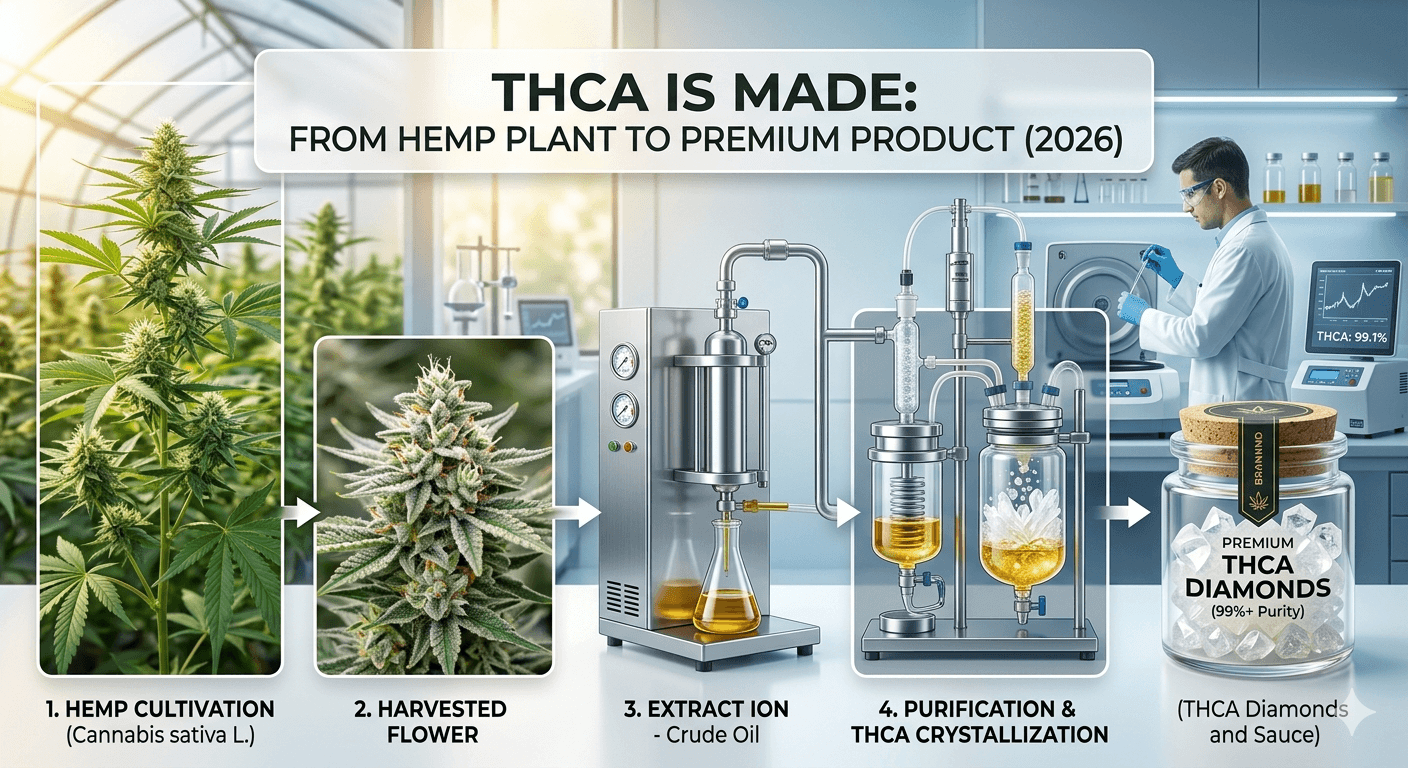
How THCA Is Made: From Hemp Plant to Premium Product (2026)

THCA products are everywhere in 2026.
From premium flower and pre-rolls to concentrates and live rosin, the hemp market has evolved rapidly over the last few years. But despite growing popularity, many buyers still ask one important question:
How is THCA actually made?
Most people understand the final product — but very few know what happens behind the scenes before premium THCA flower reaches the shelf.
The truth is that high-quality THCA products require:
- expert cultivation
- careful harvesting
- precise curing
- terpene preservation
- strict lab testing
- professional packaging
Every step matters.
A single mistake during cultivation or processing can reduce:
- aroma quality
- cannabinoid retention
- freshness
- smoothness
- overall experience
This guide explains the complete THCA production process from seed to final product so buyers can understand what truly separates premium flower from low-quality hemp.
What Is THCA?
THCA (tetrahydrocannabinolic acid) is the raw cannabinoid naturally found in hemp and cannabis plants.
Unlike THC:
- THCA is non-psychoactive in raw form
- it converts into THC when heated
- smoking or vaping activates the compound
This conversion process is called decarboxylation.
If you want a deeper explanation of how activation works, How THCA Converts to THC: Science Behind the High explains the chemistry behind the process.
Step 1: Choosing High-Quality Genetics
Everything starts with genetics.
Premium THCA flower comes from carefully selected hemp strains bred for:
- cannabinoid development
- terpene richness
- aroma quality
- appearance
- cultivation stability
Strong genetics help produce:
- dense buds
- frosty trichomes
- louder aroma
- higher cannabinoid potential
Without quality genetics, even perfect cultivation cannot create top-shelf flower.
Step 2: Cultivation Process
Once genetics are selected, growers begin cultivation.
This stage heavily influences:
- potency
- terpene preservation
- freshness
- visual quality
There are usually two main growing methods:
Indoor Cultivation
Indoor environments allow growers to control:
- temperature
- humidity
- lighting
- airflow
- nutrients
This precision often creates:
- premium appearance
- stronger aroma
- better consistency
Indoor THCA flower dominates much of the premium hemp market in 2026.
If you want a full comparison, Indoor vs Outdoor THCA Flower – Which Is Better? explains how different cultivation styles affect quality.
Outdoor Cultivation
Outdoor flowers grow naturally under sunlight and environmental conditions.
Many growers value outdoor cultivation for:
- natural terpene development
- sustainability
- lower production costs
Well-grown outdoor flowers can still produce impressive results when handled properly.
Step 3: Harvesting the Plant
Timing is extremely important during harvest.
Growers monitor:
- trichome maturity
- cannabinoid levels
- terpene development
Harvesting too early or too late can reduce:
- potency
- aroma
- smoothness
Premium cultivators carefully choose the ideal harvest window to preserve maximum quality.
Step 4: Drying the Flower
After harvesting, the flower enters the drying stage.
This process removes excess moisture slowly to prevent:
- mold growth
- terpene loss
- harsh smoke quality
Proper drying helps maintain:
- aroma strength
- flavor balance
- cannabinoid stability
Rushed drying is one of the biggest reasons low-quality flowers feel harsh or weak.
Step 5: Curing Process
Curing is one of the most important stages in THCA production.
During curing, the flower is stored under controlled conditions to stabilize:
- moisture levels
- terpene preservation
- overall smoothness
Good curing improves:
- smell
- flavor
- texture
- smoking experience
Poor curing often creates:
- dry flower
- weak aroma
- harsh sessions
This is one reason premium brands invest heavily in post-harvest handling.
Step 6: Trimming & Preparation
Once curing finishes, buds are trimmed and prepared for packaging.
Premium flower is usually:
- hand-trimmed
- visually cleaned
- carefully inspected
This stage improves:
- presentation
- bag appeal
- consistency
Buyers in 2026 increasingly expect visually premium products alongside strong potency.
Step 7: Lab Testing
Before products reach consumers, serious brands send batches for third-party testing.
Lab reports verify:
- cannabinoid content
- THCA levels
- compliance standards
- contaminant screening
- product safety
This testing process helps buyers trust product quality.
If you want to better understand Certificates of Analysis, How to Read THCA Lab Reports Like a Pro explains what experienced buyers check before purchasing.
Why Lab-Tested THCA Matters
Lab-tested products help protect buyers from:
- inaccurate potency claims
- contamination risks
- unsafe materials
- non-compliant products
In 2026, transparency has become one of the biggest trust factors in the hemp industry.
Step 8: Packaging & Freshness Protection
Once testing is complete, products are packaged for storage and shipping.
Premium brands use:
- airtight jars
- UV-resistant containers
- humidity control packs
to preserve:
- freshness
- terpene quality
- aroma strength
Poor packaging can quickly ruin otherwise high-quality flowers.
If you want to learn how freshness affects quality, How to Tell If THCA Flower Is Fresh or Old explains the warning signs buyers should look for.
How THCA Concentrates Are Made
THCA concentrates follow a different production process.
These products may involve:
- extraction methods
- terpene preservation techniques
- purification systems
Popular concentrate formats include:
- live rosin
- diamonds
- wax
- dabs
Many enthusiasts choose concentrates because they offer:
- higher cannabinoid concentration
- stronger aroma profiles
- faster sessions for experienced users
Why Terpenes Matter During Production
Terpenes influence:
- smell
- flavor
- strain identity
- overall experience
During production, poor handling can destroy terpene content quickly.
This is why premium cultivation focuses heavily on preserving aromatic compounds.
If you want to understand terpene science better, What Makes THCA Flower Smell Strong? The Terpene Guide explains why aroma quality matters so much.
What Separates Premium THCA From Low-Quality Products?
The biggest differences usually involve:
- cultivation standards
- curing quality
- freshness
- lab transparency
- terpene preservation
Premium flowers often deliver:
- richer aroma
- smoother smoke
- stronger freshness
- better consistency
Cheap products may appear similar online, but perform very differently in real-world use.
Why Buyers Are More Educated in 2026
Today’s hemp consumers understand more than ever before.
Buyers now actively research:
- terpene profiles
- cultivation methods
- lab reports
- cannabinoid quality
- freshness indicators
This shift is forcing brands to improve transparency and product standards.
Final Thoughts
So, how is THCA made?
The process involves much more than simply growing hemp.
Premium THCA products require:
- strong genetics
- controlled cultivation
- proper curing
- terpene preservation
- accurate lab testing
- freshness protection
Every stage directly affects the final experience.
In 2026, educated buyers know that true quality comes from careful production — not just marketing claims or high potency numbers.
The brands that prioritize transparency, cultivation standards, and freshness will continue leading the premium hemp market moving forward.
FAQs
How is THCA made?
THCA is naturally produced in hemp plants during cultivation and preserved through careful harvesting and curing.
Does THCA become THC?
Yes, heat converts THCA into THC through decarboxylation.
Why is curing important for THCA flower?
Curing helps preserve aroma, smoothness, and terpene quality.
What makes premium THCA flower better?
High-quality genetics, proper cultivation, lab testing, and freshness preservation.
Are all THCA products lab tested?
Trusted brands usually provide third-party lab testing for transparency and safety